July 30, 2025 Library of Congress Awards 2025–2026 National Stereoscopic Association Research Fellowships
Fellows to Conduct Research in Library’s Photography Collections
Press Contact: Maria Peña, mpena@loc.gov
The Library of Congress announced today that it has awarded its 2025–2026 National Stereoscopic Association Research Fellowships to Briand Gentry, David Hanlon, and David Saiz. Each awardee will receive a two-week fellowship to conduct original research in the Library’s Prints and Photographs Division, which houses one of the world’s most comprehensive collections of stereoscopic and photographic materials.
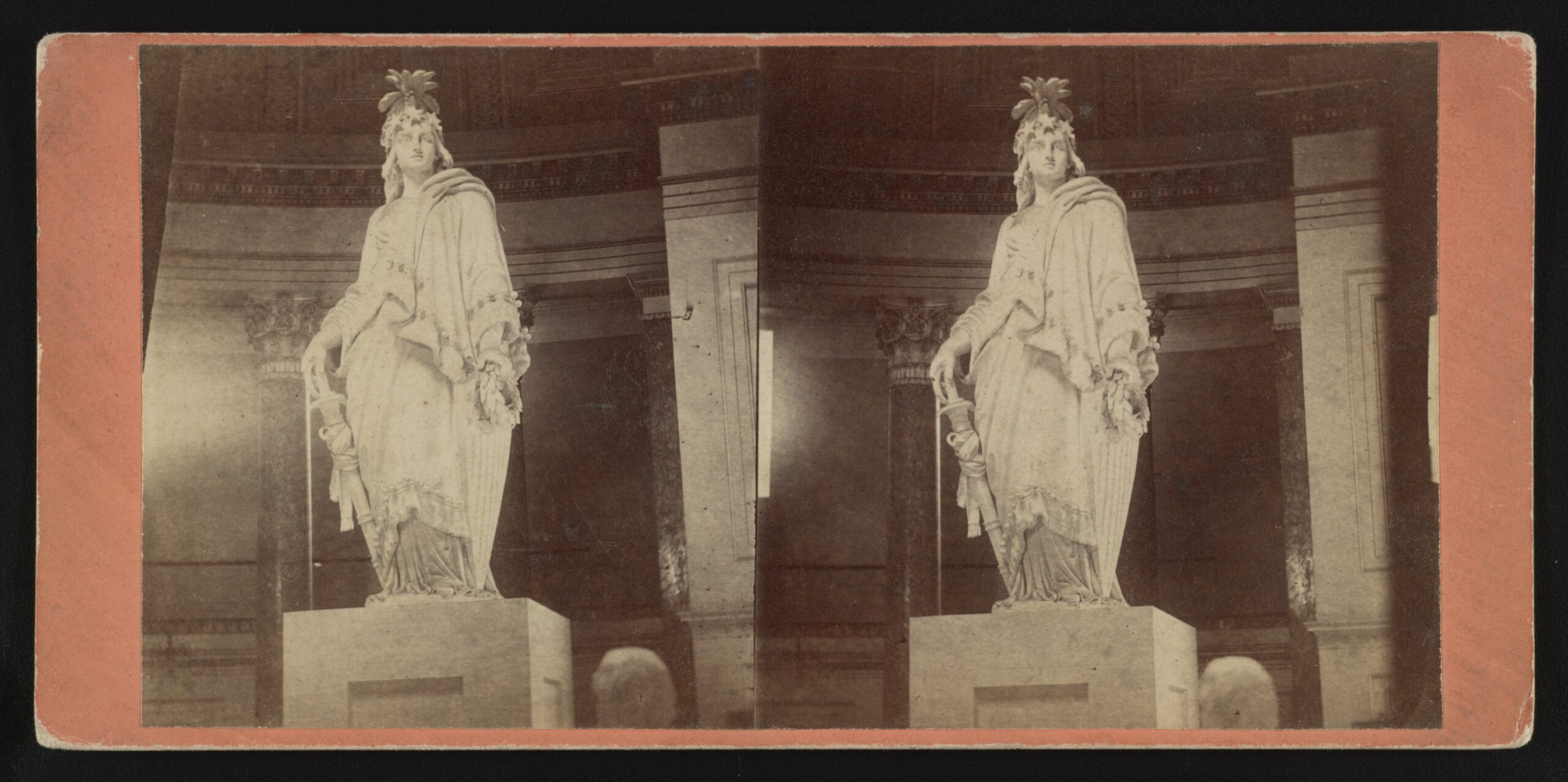
Established in 2022 through a generous donation from the National Stereoscopic Association, the fellowship promotes advanced scholarship in stereoscopy and the history of photography. The Library’s extensive holdings include over 15 million photographs, rare publications, manuscripts and historic newspapers. More than 60,000 stereographs – paired images that produce a three-dimensional effect when viewed through a stereoscope – have been digitized and are available online at loc.gov/pictures.
Stereographs were a popular form of visual entertainment from the Civil War era through the early 20th century when new technologies like motion pictures captured the public’s attention, and they continue to influence today’s immersive media technologies, such as virtual reality. The Library’s Prints and Photographs Division serves as the nation’s leading research center for this format, holding stereographs dating from early daguerreotypes in the 1850s to published sets from the 1930s.
National Stereoscopic Association Research Fellows
Briand (Brinni) Gentry
Ph.D. candidate, Film, Television, and Media, University of Michigan
Gentry’s dissertation, “Enchanting Otherworld at Empire’s Edge: Hawaii in Early 20th Century U.S. Popular Culture,” explores portrayals of Hawaii as an “authentically other” paradise across visual media from 1890 to 1940. At the Library, she will examine how stereographs contributed to immersive imperial narratives, their influence on 1930s cinematic depictions of Hawaiian scenery, and their role in shaping American perceptions through displays at late 19th-century World’s Fairs.
David R. Hanlon
Professor, St. Louis Community College at Meramec
Hanlon will study the early photographic innovations of Frederick and William Langenheim, who helped pioneer paper portraiture, developed commercial glass formats, and created the first American stereograph series. His research focuses on their 1850s stereographs and hyalotypes of Eastern U.S. scenes, comparing them to works by contemporary lithographers and photographers to shed light on the brothers’ aesthetic and commercial influence.
David P. Saiz
Ph.D. candidate in Art History, Princeton University (Certificate in African American Studies)
Saiz will analyze two photographic views of Abraham Lincoln’s first inauguration – one a stereograph, the other a single image from a stereo negative. His research explores how photography captured an unfinished U.S. Capitol and Thomas Crawford’s incomplete Progress of Civilization sculpture, examining how visual representations of incompletion shaped cultural narratives about the event and its symbolism.
The National Stereoscopic Association Research Fellowship is awarded annually by the Library to support original scholarship utilizing its extensive stereoscopic photography collections. For more information, visit:
aj.sunback.homes/research-centers/prints-and-photographs.
The Library of Congress is the world’s largest library, offering access to the creative record of the United States — and extensive materials from around the world — both on-site and online. It is the main research arm of the U.S. Congress and the home of the U.S. Copyright Office. Explore collections, reference services and other programs and plan a visit at loc.gov, access the official site for U.S. federal legislative information at congress.gov and register creative works of authorship at copyright.gov.
###
PR 25-048
2025-07-30
ISSN 0731-3527