


Size exclusion chromatography (SEC, also known as gel permeation chromatography GPC) is used to characterize high-molecular mass polymers by their size distribution and molecular weight distribution. These polymers include natural polymers like cellulose found in paper-based materials, and synthetic polymers like polyurethane found in magnetic media. This tool needs only microgram-scale amounts of material (roughly 1 mm2 from a typical page of paper), allowing for minimally invasive analysis of objects at the molecular level.
SEC methods and measurements of cellulose in real-world book papers are currently being correlated with a range of various book conditions and properties as part of the Assessing the National Collection Project.
Applications
- Assessment of paper condition and deterioration, which correlate to strength and brittleness.
- Indirect evaluation of new conservation treatments, like repair adhesives or solvent treatment, by observing their effects on the molecular weight of test substrates.
- Characterization of products from degradation of polyurethanes in magnetic media related to “sticky shed syndrome.”
- Characterization of products from degradation of acetate film.
Publications and Presentations
“Micro-Sampling size exclusion chromatography at the Library of Congress for the analysis of paper aging and degradation.” 254th American Chemical Society National Meeting, Washington D.C. Aug. 20 2017. https://sso.acs.org/idp/service/loginrequest (ACS login required)
Centuries of Cellulose: Lessons Learned from the Molecular Analysis of Cellulose in Aged Paper Collections”. Topics in Preservation Series, Library of Congress. Aug. 29 2017. //aj.sunback.homes/preservation/outreach/tops/davis/index.html
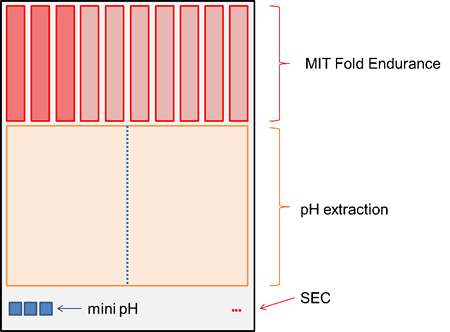
Scale illustration of an 8.5”x 11” piece of paper, showing the minimally-invasive amount of material required for SEC results. These results can be correlated to other, more invasive analytical tests.


