
Latin Artists on the Recording Registry
Since the start of the Library of Congress’ National Recording Registry, the works of Latinx talent has been a part of it. From salsa to mariachi, here are some of the many of the many artists who have been, so far, recognized on the Registry. This is not a full list; for that please see the full list.
Recordings are listed in chronological order:
"The Very First Mariachi Recordings." Cuarteto Coculense. (1908-1909) (album)

Mariachi music and its imagery are now emblematic of Mexican national identity, but it was once a rural style of music played mainly in the state of Jalisco. In 1908, four musicians from the town of Cocula, Jalisco, led by the vihuela player Justo Villa, made the very first recordings of it in Mexico City, where two years earlier they had introduced the style to the capital when they performed for the Mexican president Porfirio Diaz. These performances lack the trumpet now inextricably associated with mariachi, but even the early recording technology of the time could not fail to capture the group’s drive and spirit, and the recordings remained in print for many years. Thanks to the efforts of scholars and record collectors, the group’s work was collected and reissued in 1998 by Arhoolie Records, revisiting and reviving an otherwise lost chapter in mariachi’s history and paying overdue homage to these recording pioneers. Selected for the 2023 registry.
"El Manisero" ("The Peanut Vendor") (Rita Montaner, vocal with orchestra); "El Manisero" (Don Azpiazu and His Havana Casino Orchestra). (1927; 1930)
Popular Cuban singer and radio artist Rita Montaner recorded the first version of the traditional song "El Manisero" in Havana in 1927. The Don Azpiazu and His Havana Casino Orchestra version of "El Manisero," adapted from Montaner's recording, was made in New York City three years later. It is the first American recording of an authentic Latin dance style composition. This later recording launched a decade of "rumbamania," introducing U.S. listeners to Cuban percussion instruments and Cuban rhythms. Selected for the 2005 registry.
"Gregorio Cortez." Trovadores Regionales. (1929)
This vocal duet with guitar, by Pedro Rocha and Lupe Martinez, is an outstanding example of the "corridos" style of ballad. Reflecting the cultural conflicts between Mexican-Americans and Anglo-Americans in the American Southwest, it describes the heroics of a vaquero falsely accused of murder. The Vocalion label recording of "Gregorio Cortez" is representative of the significant recordings being preserved in the Arhoolie Foundation's Strachwitz Frontera Collection of commercially-produced Mexican and Mexican-American recordings at the University of California, Los Angeles. Selected for the 2004 registry.
"Lamento Borincano" (single). Canario y Su Grupo. (1930)

"Lamento Borincano" was written about the plight of the Puerto Rican farmer during the Great Depression. It is well known in Puerto Rico and throughout Latin America to this day and has been recorded dozens of times, including versions by contemporary singers such as Marc Anthony and Placido Domingo. The song's success launched the careers of three major Puerto Rican artists: songwriter Rafael Hernández, bandleader "Canario" (Manuel Jiménez) and singer "Davilita" (Pedro Ortiz Dávila), who was just 18 when he recorded the song. The term "Borincano" derives from the indigenous name for Puerto Rico—Borinquen. The song tells of a proud mountain farmer who rides into the cities of Puerto Rico to sell his wares, but finds them empty and abandoned and returns home wondering "what will become of Borinquen … what will become of my children and my home?" Selected for the 2017 registry.
"Mal Hombre." Lydia Mendoza. (1934)

Singer Lydia Mendoza (1916-2007) once said, "It doesn't matter if it's a corrido, a waltz, a bolero, a polka or whatever. When I sing that song, I live that song." Mendoza had been performing and recording with her family's band since the late 1920s, and was only 16 when she recorded "Mal Hombre," investing the song's bitter lyrics with an artistic maturity that belied her age: "Cold-hearted man, your soul is so vile it has no name." "Mal Hombre" launched her solo career, her stark voice and graceful 12-string guitar lines resounding strongly with the Spanish-speaking audience of Texas. The Houston-born singer was soon known as "La Alondra de la Frontera," The Lark of the Border. Selected for the 2010 registry.
"La Chicharronera" (single). Narciso Martinez and Santiago Almeida. (1936)

Martinez and Almeida, two pioneers of the Tex-Mex conjunto music, introduced the classic accordion (Martinez) and bajo sexto (Almeida) combination on this, their first recording for Bluebird Records. Martinez was known as the "Father of Conjunto Music" and had a long career in Texas, performing from a huge repertoire of regionally popular dance tunes and styles including polkas, redovas, schottisches, waltzes, mazurkas, boleros, danzones and huapangos. Almeida developed the bajo sexto guitar as the distinctive accompanying instrument in the classic conjunto style. Their music exemplified the blending of Central European instruments and dance genres with those of Mexican Texas that had been going on for at least a generation before they made their first recordings. This conjunto sound remains popular in Tex-Mex music in an expanded and amplified form. Martinez and Almeida were later honored with the NEA's National Heritage Fellowship artist award in 1983 and 1993, respectively. Selected for the 2019 registry.
"O Que é que a Bahiana tem." Carmen Miranda. (1939)
This recording, with its lively exchange between singer and dancer Carmen Miranda and the band, embodies the merriment of Brazilian Carnival songs. "O Que é que a Bahiana tem" ("What does the Bahian girl have?") was an enormously successful recording in Brazil that celebrated Bahia culture at its roots and solidified samba's hold on Brazilian popular music. The recording helped to introduce both the samba rhythm and Carmen Miranda to American audiences. It was also the first recording of a song by Dorival Caymmi, who went on to become a major composer and performer. Selected for the 2008 registry.
- Expanded essay by Katherine Bishop-Sanchez (PDF, 81KB)
- Expanded essay by Cary O'Dell (PDF, 78KB)
- Listen to 'O Que é que a Bahiana tem'
- Radio Feature (MP3)
"Native Brazilian Music" (album). Recorded under the supervision of Leopold Stokowski. (1942)
Leopold Stokowski and his All-American Youth Orchestra performed in Rio de Janeiro as part of a goodwill tour to South America in the summer of 1940. Prior to his visit to Brazil, Stokowski asked composer Heitor Villa-Lobos to help him collect and record popular Brazilian music, of which the conductor was a great admirer. Villa-Lobos assembled an elite group of musicians, including Pixinguinha, Donga, Cartola, Jararaca, Ratinho and José Espinguela. Forty recordings were made onboard the ship carrying Stokowski and the orchestra. Seventeen of the recordings, embracing musical styles such as sambas, batucadas, macumba and emboladas, were released in 1942 by Columbia Records on a 78-rpm album, "Native Brazilian Music." Selected for the 2006 registry.
"Manteca." Dizzy Gillespie Big Band with Chano Pozo. (1947)
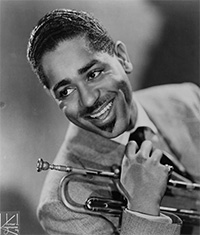
Latin jazz, sometimes called Afro–Cuban jazz, incorporates jazz improvisation with Cuban rhythms. The music strongly emphasizes percussion, using congas, timbales and bongos to supplement piano, guitar or vibes with horns and vocals. A pioneer of this pulsating, infectious sound was Dizzy Gillespie, who was greatly influenced by Chano Pozo, a Cuban singer and drummer. Performing with Gillespie for the first time in 1947, Pozo joined Gillespie's bebop big band and composed "Manteca" with him, later recording it for RCA Victor. Selected for the 2004 registry.
"Descargas: Cuban Jam Session in Miniature" (album). Cachao Y Su Ritmo Caliente. (1957)

Inspired by the all-star jam sessions that Norman Granz organized and recorded for his Jazz at the Philharmonic series, Cuban bassist Israel "Cachao" Lopez, already a giant of Afro-Cuban music, sought to accomplish something similar with his peers in Havana. He brought musicians into the studio for two early morning sessions, when they were still fully charged up from their evening's work in nightclubs and ballrooms. Rather than record long form jams, as Granz had done, the twelve musicians Cachao recruited created twelve short, spontaneous "miniature" pieces, each of which highlighted key instruments and facets of Afro-Cuban music. The resulting fusion blended African, European and American influences seamlessly. "Descargas"has had a lasting impact on Latin music, especially on the Salsa style that emerged in the 1960s, and Cachao organized many similar sessions for further albums both in Cuba and in the United States, where he settled after the Cuban revolution. Selected for the 2012 registry.
"Dance Mania" (album). Tito Puente. (1958)

Bandleader/instrumentalist Tito Puente is considered to be a Renaissance man of Latin music. The very best of New York City's 1950s Latin jazz scene is heard on this landmark album of 1958. Selected for the 2002 registry.
"La Bamba" (single). Ritchie Valens. (1958)
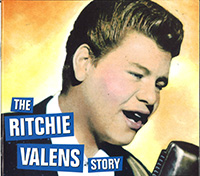
Ritchie Valens was born Richard Valenzuela in Los Angeles in 1941. English was his first language and though he never mastered Spanish, he learned Spanish songs from his Mexican-American family, including "La Bamba," a song from Vera Cruz that was a favorite dance piece at weddings. Valens amplified guitar and power chords were a long way from the acoustic string band sounds of Mexico, but he transposed the feeling and rhythm of the song to the back beat of early rock and roll successfully. The song was released as the b-side of his second single, "Donna," in late 1958, and had become a hit on its own when he died in the February 3rd, 1959 plane crash that also took the lives of Buddy Holly and J.P. Richardson a.k.a. "The Big Bopper." In spite of his brief life, Valens's success brought a new sound to the mainstream, and inspired generations of Chicano musicians. Selected for the 2018 registry.
"The Girl from Ipanema." Stan Getz, Joao Gilberto, Antonio Carlos Jobim, and Astrud Gilberto. (1963)
This instantly recognizable performance popularized the melodic, samba-based, Brazilian bossa nova sound in the U.S. Guitarist and song composer Antonio Carlos Jobim teamed with saxophonist Stan Getz and Gilberto's wife, vocalist Astrud Gilberto, to create this sensuous recording. Selected for the 2004 registry.
"Azucar Pa' Ti" (album). Eddie Palmieri. (1965)
This album pointed the way for Latin music in the United States in the 1960s and beyond, and was the result of a conscious effort on Palmieri's part to capture on record the sound he and his eight piece La Perfecta band were then serving up to New York nightclub audiences. Though steeped in the earlier Afro-Cuban styles that he loved, Palmieri's band represented several Latin music traditions, and was particularly distinguished by the contributions of the hard-charging, Bronx-born trombonist Barry Rogers. Selected for the 2009 registry.
- Expanded essay by Steven Loza (PDF, 43KB)
- Interview with Eddie Palmieri (PDF, 144KB)
- Listen to 'Azucar Pa' Ti'
"Abraxas." Santana. (1970)

Santana's second album consolidated the group's position as purveyors of a unique blend of Latin music, rock, blues and modal jazz. The group's rhythm section was of key importance in this musical mission. While the songs "El Nicoya" and "Se Acabo" allow Jose "Chepito" Areas's timbales and Mike Carabello's congas a chance to stretch out, their contributions are even more important on the more rocking numbers and especially on the jazz-influenced ones. Greg Rollie proves adept at writing compelling rocker tunes while contributing outstanding organ solos. Meanwhile, the standard rock rhythm section--Dave Brown, bass; Mike Shrieve, drums—prove adept at switching from jazz to rock to Latin. Still, it is Carlos Santana's signature guitar tone, which is possessed of nearly infinite sustain, and his lyrical melodies, that have proven highly compelling to this day. Selected for the 2015 registry.
“El Rey” (single). Vicente Fernandez. (1973)

“El Rey” – its title translates to “The King” – is one the most enduring songs of the ranchera genre, a category of Mexican music known for its dramatic emotion and lyrics about love, though the subject of “El Rey” is the singer’s declaration of personal pride and honor: And my word is the law/ I have no throne or queen/ Nor anyone who understands me/ But I am still the king. It was first recorded in 1971 by its writer Jose Alfredo Jimenez. In 1973, however, mariachi singer Vicente Fernandez made it entirely his own, much as Frank Sinatra did with a similarly prideful song “My Way,” with which it is often compared. Selected for the 2025 registry.
"Celia & Johnny" (album). Celia Cruz and Johnny Pacheco. (1974)
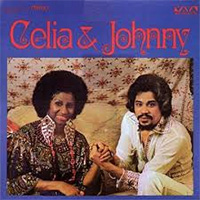
Cuba's Celia Cruz was a dominant artist in the Afro-Cuban scene of the 1950s, when she sang with the great Sonora Matancera band. She came to America in 1962, and did well initially but, by the early 1970s, Latin styles nurtured in the US were dominant, and her career entered a slump. For this mid-'70s album, rather than recreate the large orchestras that Cruz usually fronted, New York based bandleader and co-founder of the Fania Records label Johnny Pacheco assembled a small group that included pianist Papo Lucca, tres player Charlie Martinez, and several percussionists, including himself. This proved to be the perfect setting for Cruz to reach a newer and younger audience while simultaneously remaining true to her roots. And she responded with some of the most inspired singing of her career, especially in "Celia & Johnny's" many improvised passages. The album's opening rumba, "Quimbara," was a huge dance floor hit and Cruz was soon acclaimed as the Queen of Salsa. Selected for the 2013 registry.
“Before the Next Teardrop Falls” (single). Freddy Fender. (1975)
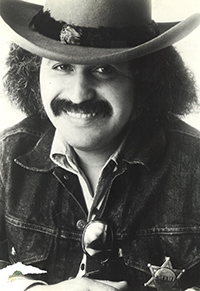
Freddy Fender, born Baldemar Huerta in San Benito, Texas, in 1937, had enjoyed some local success as a singer in the late 1950s and 1960s, singing rock and roll and ballads in English and Spanish, but he was still only a part-time musician when he made his breakthrough with this signature song. “Before the Next Teardrop Falls” was an unlikely candidate for success, being recorded for a local Texas record label and using a muted instrumental accompaniment in an era of high volume production and with one whole verse and chorus sung in Spanish, but Fender’s expressive and plaintive tenor carried the day, and when the song was issued nationally, it was a crossover hit with pop and country audiences, and a major artist emerged into the mainstream. Selected for the 2025 registry.
"Live at Yankee Stadium" (album). The Fania All-Stars. (1975)
The All-Stars are the house band of Fania Records, one of the U.S.'s most significant Latin music record labels. The All-Stars popularized New York City salsa during the 1970s through their concerts at the Red Garter in Greenwich Village, Yankee Stadium in The Bronx, and Coliseo Roberto Clemente in San Juan, Puerto Rico. This two-LP set features top salsa singers Celia Cruz, Hector Lavoe, Cheo Feliciano, Ismael Miranda, Justo Betancourt, Ismael Quintana, Pete "Conde" Rodriguez, Bobby Cruz, and Santos Colon. Selected for the 2003 registry.
“El Cantante.” Héctor Lavoe. (1978) (single)

Written by the Panamanian musician, singer and composer Rubén Blades, and produced by Willie Colón, “El Cantante” is a song made famous by Puerto Rican salsa singer Héctor Lavoe (1946-1993). Debuted on the 1978 Fania Records album “Comedia,” “El Cantante” became the signature song for Lavoe and provided the title for the 2006 biopic of his life staring Marc Anthony. Lavoe’s difficult life also inspired the 1999 off-Broadway production “¿Quién mató a Héctor Lavoe?” [“Who Killed Hector Lavoe?”]. The song narrates the livelihood, struggles and adversities that singers experience, along with describing how they must interact positively with the public—who, in the end, are their only supporters. “El Cantante” is an excellent example of the many songs that became emblematic at the height of the 1970’s New York City salsa era. Selected for the 2024 registry.
- Expanded essay by Sergio Ospina Romero (PDF, 188KB)
- Interview with Ruben Blades (PDF, 148KB)
- Listen to 'El Cantante' (MP3)
"Canciones de mi Padre" (album). Linda Ronstadt. (1987)

Even when she was working mainly within the genres of country/rock and pop, Linda Ronstadt often referenced her Mexican-American roots. In 1987, with her remarkable vocal prowess then at its considerable peak, she paid full tribute to it with her album "Canciones de mi Padre." Though Ronstadt’s record label was expecting little after the collection’s release, the album quickly went double platinum, earned the Grammy for Best Mexican/Mexican-American album and is the biggest-selling non-English recording in American recording history. The album also spawned two equally successful follow-ups. As its title suggests, "Canciones" is a tribute to the musical history of Ronstadt’s family, incorporating many layers of musical influence. Ronstadt’s album brought 13 classic songs to a previously underserved audience. She recorded her selections with four distinguished mariachi bands (Maricahi Vargas de Tecaltlan, Mariachi Vargas, Mariachi Los Camperos, and Mariachi Los Galleros de Pedro Reyand), in the process, introducing mariachi music to an untold number of new listeners. Selected for the 2022 registry.
- Expanded essay by Daniel Sheehy (PDF, 204KB)
- Interview with Linda Ronstadt (PDF, 826KB)
- Listen to 'La Charreada' (MP3)
"Rhythm Is Gonna Get You" (single). Gloria Estefan and Miami Sound Machine. (1987)

From the moment of her debut on the U.S. charts—fronting the Miami Sound Machine with their 1985 earworm "Conga"—Gloria Estefan has been recognized as not only the banner-carrier for Latin rhythms within American music but also for her superlative vocal abilities. She is equally adept in either slow, contemplative ballads or, as in this selection, with high-octane, dance-oriented party anthems. "Rhythm," the first single from Estefan and the Machine's 1987 album "Let It Loose," was co-written by Estefan and Sound Machine drummer Enrique "Kiki" Garcia. His pounding backbeat, along with the song's lively congas and Estefan's spirited vocals, have turned "Rhythm" into a modern classic and one that repeatedly proves the promise made in its title. Selected for the 2017 registry.
- Expanded essay by Ilan Stavans (PDF, 102KB)
- Interview with Gloria Estefan (PDF, 46KB)
- Inductees' Gallery - Emilo Estefan and GLoria Estefan, performers
- Listen to 'Rhythm Is Gonna Get You'
“Amor Eterno.” Juan Gabriel. (1990) (single)

Out of all of Juan Gabriel’s acclaimed musical oeuvre, “Amor Eterno” is his most famous and, perhaps, most heartbreaking. A celebrated Mexican singer-songwriter and actor, Juan Gabriel wrote “Amor Eterno” as a tribute to his mother who passed away in 1974 while the singer was on tour in Acapulco. Gabriel recounts this moment in the lyrics as “El más triste recuerdo de Acapulco” (“The saddest memory of Acapulco”). A bolero with mariachi accompaniment, “Amor Eterno” doesn’t need translation, anyone can grasp the magnitude of grief expressed in the lyrics and melody. It has become a hymn of sorrow, immortalizing the sadness of losing a loved one while commemorating the eternal love that exists between a mother and son. Selected for the 2024 registry.
"Ven conmigo" (album). Selena. (1990)

This 1990 album by Selena Quintanilla, known to millions of fans simply as Selena, was the first Tejano record by a female artist to achieve gold status. The album also marks a turning point both in Selena's career and within the Tejano music genre — as it brought the music to a wider American audience and upended the dominance of male-led acts within the genre. Selena's biographer, Joe Nick Patoski, highlights the expanded stylistic scope of the album, which Selena's versatility made possible. The selections pushed the boundaries of the Tejano genre at the time while keeping the beat at the heart of the music; as Patoski quoted Selena, "I don't think you can really mess with the beat." Hits like "Baila esta cumbia" helped establish Selena as "the reigning queen of the Tejano music world," as her obituary in The New York Times called her just five years later. Selected for the 2019 registry.
"Partners" (album). Flaco Jiménez. (1992)

When asked about the significance of American roots music, Leonardo "Flaco" Jiménez once replied that it was in "the sharing and blending of different kinds of music, like a brotherhood thing. It makes the world rounder when there's coordination." Jiménez, the son of conjunto pioneer Santiago Jiménez, has combined tradition and innovation throughout his seven-decade career, working with artists as varied as the Rolling Stones, Dwight Yoakam, Carlos Santana, and Willie Nelson. On this bilingual album, the San Antonio-born artist shows this philosophy in action in collaborations with Stephen Stills, Linda Ronstadt, John Hiatt, Ry Cooder, Emmylou Harris, and Los Lobos, in a variety of traditional and contemporary musical settings. Selected for the 2020 registry.
- Expanded essay by Erin Bauer (PDF, 273KB)
- Interview with Flaco Jiménez (PDF, 138KB)
- Inductees' Gallery - Flaco Jimenez, performer
- Listen to 'Partners' (MP3)
- Radio Feature
"Buena Vista Social Club" (album). (1997)

In 1996, guitarist Ry Cooder and producer Nick Gold journeyed to Havana, Cuba, to record an all-star ensemble of 20 Cuban musicians, most of whom had been central in the development of the key Cuban musical styles of son, danzon, and bolero. The group adopted the name the Buena Vista Social Club to honor the popular nightclub of the same name at which many of the performers had appeared in the 1940s and 1950s. The album’s surprising popularity helped fuel a resurgence of Cuban and Latin music, and propelled the band to concert dates in Amsterdam and New York’s Carnegie Hall, and led to a popular film by director Wim Wenders. Wender’s film, "The Buena Vista Social Club," was previously selected for the National Film Registry, and it is now fitting to add the record that started all the excitement. Selected for the 2022 registry.
- Expanded essay by Fred Metting (PDF, 181KB)
- Interview with Ry Cooder (PDF, 147KB)
- Listen to 'Chan Chan' (MP3)
"Livin’ La Vida Loca" (single). Ricky Martin. (1999)
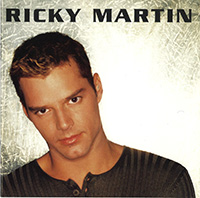
When ex-boy band member Ricky Martin (once a part of Latin America’s perpetually young Menudo group) gave a legendary, star-making performance at the 1999 Grammy Awards (singing the World Cup anthem "Cup of Life"), audiences quickly realized that big things were going to be coming from this young singer. But few expected the massive overwhelming popularity of his first major US release, "Livin’ La Vida Loca." Written by Draco Rosa and Desmond Child, and drenched in the swagger of Martin’s lead vocal, the song went #1 in 20 countries and was certified platinum in the US, the UK and Australia. Later, it was named the ASCAP Song of the Year, the BMI Latin Awards Song of the Year and would win four Grammys. Earworm-y, fun and danceable, yet true to its Latin roots thanks to its horns and percussion, Martin was soon labeled by the press as the "original Latin Crossover King," in the process paving the way for the globalization of Latin Pop and the emergence of such other acts as Shakira, Paulina Rubio and others. Selected for the 2022 registry.
- Expanded essay by Jorge Torres (PDF, 190KB)
- Inductees' Gallery - Desmond Child, co-songwriter
- Listen to 'Livin’ La Vida Loca' (MP3)
- Radio Feature
"Gasolina" (single). Daddy Yankee. (2004)

Its roots source back to Panama, Puerto Rico and other Latin American countries in the 1980s. The genre now called “reggaeton” was originally described as Reggae, reggae en español, dancehall, hip-hop and dembow. But despite its genesis 30 years prior, reggaeton was only truly ignited with the debut of Daddy Yankee’s massive, seismic-shifting 2004 hit “Gasolina.” A song by a Latin artist first released to Latin radio, “Gasolina’s” unparalleled success quickly poured over every border, musically and geographically, hitting big with a wide swath of audiences. “Gasolina’s” aural dominance was so great that it ushered in a full reggaeton explosion and even saw various radio stations switching their formats — some even switching from English language to Spanish — to be part of the reggaeton revolution. “Barrio Fino,” the album which includes “Gasolina,” debuted at No. 1 on the Top Latin Albums chart, and “Gasolina” was the first reggaeton nominee for a Latin Grammy Award for Record of the Year. Not surprisingly, “Gasolina” is the first reggaeton recording to be added to the National Registry. Selected for the 2023 registry.
“Hamilton” (album). Original Broadway Cast Album. (2015)

At first, retelling the story of one of America’s Founding Fathers through the lens of rap and hip-hop seems incongruous – if not impossible. But from the wildly fecund mind of Lin-Manuel Miranda, it became a reality. Bowing for the first time on Broadway on July 13, 2015, “Hamilton” was a sensation, a phenomenon and seismic change to the world of musical theater. The production easily garnered the Tony Award that year for Best Musical and was awarded a Pulitzer Prize for Drama. The album has achieved the distinction of being the best-selling original cast recording in history, earning the Grammy Award for Best Musical Theater Album in the process. In its translation from the stage show to album, little, musically, has been lost on this original Broadway cast album released not long after the show opened. Selected for the 2025 registry.