
LGBTQ+ People on the Recording Registry
Of course, for many LBGTQ+ people, being “out” during the first 100 or so years of audio recording was not possible. Nevertheless, greater social tolerance and understanding has allowed them to be belatedly recognized. Weather out at the time or not, LBGTQ+ creators have always been among us and their accomplishments always impactful. Here are some of these community members, sometimes as part of larger ensembles, who have, so far, been recognized by the NRR. For a complete list of all NRR works, please see the full list.
Recordings are listed in chronological order:
"Down Hearted Blues." Bessie Smith. (1923)

"Down Hearted Blues" is the best-selling and most enduring first release by the "Empress of the Blues." Bessie Smith first recorded in 1923, launching a blues career that would have no parallel during the classic blues era. She recorded more than 150 songs over her 14-year recording career. Selected for the 2002 registry.
"You're the Top." Cole Porter. (1934)

"You're the Top" is a work by composer/lyricist Cole Porter at the top of his form. Seamlessly, the words and music of this quintessential "list song" convey wit, exuberance, and charmingly high- and low-cultural references. This solo performance, by Porter, invites the listener to become part of Porter's universe and imagine the composer performing, much as he might have for friends on a luxury cruise or in his own Waldorf Astoria suite. Selected for the 2006 registry.
"Tutti Frutti." Little Richard. (1955)

In 1955, when he entered Cosimo Matassa's New Orleans studio, 22 year-old "Little Richard" Penniman was a seasoned rhythm and blues performer but an unsuccessful recording artist in search of a breakthrough hit. At first, there seemed to be scant rapport between Richard and the other musicians, and a frustrating session ensued. Not until Richard started extemporizing verses of "Tutti Frutti," a risqué feature of his club sets, did the music catch fire. Even in the less-suggestive version that was eventually released, Little Richard's unique vocalizing over the irresistible beat announced a new era in music. Selected for the 2009 registry.
"Howl." Allen Ginsberg. (1959)

"Howl," Ginsberg's most famous poem, was an experiment in the invention of a new style of poetry, one based not on "little short-line patterns" but on "the formal organization of the long line." The poem employs vivid visual impressions and chaotic phrasing. In his recitation, Ginsberg is particularly effective in his relatively unemotional delivery despite his passionate language and the work's frequent literary anger which describes the history of the Beat Generation and documents its anti-establishment rage. When "Howl" was first published in 1956, it was banned for obscenity and became a celebrated legal case among defenders of the First Amendment. Ginsberg appears on this recording at a 1959 Chicago "Big Table" reading presented by the Shaw Society in Chicago, Illinois. Selected for the 2006 registry.
"Switched-On Bach" (album). Wendy Carlos. (1968)

This meticulously recorded album introduced the Moog synthesizer to a much wider audience than it had previously reached. Many of the separate synthesizer voices on the album were recorded to tape individually and carefully mixed to create the final product. After the recording, Bob Moog's musical circuitry enjoyed an enormous boom. Within a decade the synthesizer was well established in the idioms of rock, dance and Western art music. Wendy Carlos went on to record several more well-crafted Bach recordings. Selected for the 2005 registry.
"Dusty in Memphis" (album). Dusty Springfield. (1969)

By 1968, London-born singer Dusty Springfield was already a success in the United Kingdom when she came to America to record "Dusty in Memphis," which would become the defining album of her career. Even before "Memphis," Springfield had strong ties to American music having released hits written by Burt Bacharach and Hal David as well as Gerry Goffin and Carole King. Three legendary producers were involved in the sessions: Jerry Wexler, Arif Mardin and Tom Dowd. The The instrumental tracks were recorded at legendary American Sound Studio in Memphis, Tennessee, featuring the 827 Thomas Street Band and backup vocalists, the Sweet Inspirations. Springfield initially recorded her vocals there as well, but reportedly dissatisfied with the results, later rerecorded them at Atlantic Studios in New York City. Although the single "Son of a Preacher Man" was a hit, early album sales proved modest. Over time, "Dusty in Memphis" grew in stature to become widely recognized as an important album by a woman in the rock era. Elvis Costello, who contributed the liner notes on the "Memphis" 2002 reissue writes, "Dusty Springfield's singing on this album is among the very best ever put on record by anyone." Her voice, Costello wrote, was "... recorded in the audio equivalent of 'extreme close-up.' Every breath and sigh is caught and yet it can soar." Selected for the 2019 registry.
“Goodbye Yellow Brick Road” (album). Elton John. (1973)

“Goodbye Yellow Brick Road” is the seventh album by the legendary songwriting team of Elton John and Bernie Taupin, and it is considered to be the masterpiece that launched John into superstardom, even extending his reach beyond the pop charts. One of its songs, “Bennie and the Jets,” became, in a surprise to many, a hit on the soul charts. To date, “Goodbye Yellow Brick Road” is John’s biggest-selling studio album of all time, selling more than 30 million copies worldwide. Primarily written and recorded at the famous Château d'Hérouville in France, this double-album includes “Bennie and the Jets,” “Candle in the Wind,” “Saturday Night’s Alright for Fighting,” “Funeral for a Friend/Love Lies Bleeding,” and “Harmony,” as well as the title track. According to John, “‘Goodbye Yellow Brick Road’ is the height of our personal powers and is true perfection.” Selected for the 2025 registry.
"Bohemian Rhapsody" (single). Queen. (1975)

"Bohemian Rhapsody" breaks nearly every rule in the playbook for rock songs: it starts with a gentle a cappella intro; it has a complex structure without a chorus, and it clocks in at nearly six minutes. Nonetheless, songwriter and vocalist Freddie Mercury, while acknowledging the risk, was convinced that the public would receive it enthusiastically. Guitarist Brian May remembers the band being largely supportive of Mercury’s composition, finding it "intriguing and original, and worthy of work." In fact, the recording required a huge amount of work with one section requiring 180 overdubs, and the vocal sessions with Mercury, May and drummer Roger Taylor stretched to ten or twelve hours. Bassist John Deacon does remember an attempt to edit the song, but, in the end, he and the band felt nothing should be lost. Ultimately, "Rhapsody" was released in its full length and audiences embraced it. The song has proven to have a number of afterlives, appearing in "Wayne’s World" and the bio-pic "Bohemian Rhapsody," ensuring its continued place in the public’s consciousness. Selected for the 2022 registry.
- Expanded essay by Don Breithaupt (PDF, 233KB)
- Interview with Sir Brian May (PDF, 169KB)
- Listen to 'Bohemian Rhapsody' (MP3)
"You Make Me Feel (Mighty Real)" (single). Sylvester. (1978)

Disco was at its peak of popularity in late 1978 when Sylvester (nee Sylvester James, Jr., a.k,a. The Fabulous Sylvester) released "You Make Me Feel (Mighty Real)." His urgent falsetto reflected his childhood background in both African-American gospel music and his more recent work as a drag performer in San Francisco. Though, to some, "You Make Me…" evidenced that disco was just a mass-produced sound, lacking in depth or personality, to others, the highly personal and emotional performance of Sylvester gave it gravitas while also pushing gender-bending (which Sylvester reveled in) further into the musical mainstream. Patrick Cowley's production anticipated later developments in electronic dance music and, together, the result was an anthem that has since been covered, successfully, several times. Selected for the 2018 registry.
- Expanded essay by Joshua Gamson (PDF, 51KB)
- Interview with “You Make Me Feel” co-songwriter James Wirrick (PDF, 46KB)
- Reflections by Sandra Bernhard (PDF, 58KB)
- Inductees' Gallery - James Wirrick, co-writer
- Listen to 'You Make Me Feel (Mighty Real)'
"Radio Free Europe." R.E.M. (1981)

The original Hib-Tone single of this song set the pattern for later indie rock releases by breaking through on college radio stations targeted by label owner and producer Jonny Hibbert, in the face of mainstream radio's general indifference. Although a more elaborately produced version of the song appeared on the band's first album "Murmur," the original maintains a raw immediacy that undoubtedly contributed to its overwhelmingly favorable critical reception. Singer Michael Stipe's elliptical lyrics and guitarist Peter Buck's arpeggiated open chords would not only become signatures of the band's future output, but they added greatly to the song's enigmatic appeal. Selected for the 2009 registry.
- Expanded essay by Lori Majewski (PDF, 58KB)
- Interview with Mike Mills of REM (PDF, 72KB)
- Inductees' Gallery - Mike Mills, performer
- Listen to 'Radio Free Europe' (MP3)
- Radio Feature (MP3)
"Livin’ La Vida Loca" (single). Ricky Martin. (1999)
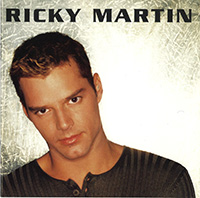
When ex-boy band member Ricky Martin (once a part of Latin America’s perpetually young Menudo group) gave a legendary, star-making performance at the 1999 Grammy Awards (singing the World Cup anthem "Cup of Life"), audiences quickly realized that big things were going to be coming from this young singer. But few expected the massive overwhelming popularity of his first major US release, "Livin’ La Vida Loca." Written by Draco Rosa and Desmond Child, and drenched in the swagger of Martin’s lead vocal, the song went #1 in 20 countries and was certified platinum in the US, the UK and Australia. Later, it was named the ASCAP Song of the Year, the BMI Latin Awards Song of the Year and would win four Grammys. Earworm-y, fun and danceable, yet true to its Latin roots thanks to its horns and percussion, Martin was soon labeled by the press as the "original Latin Crossover King," in the process paving the way for the globalization of Latin Pop and the emergence of such other acts as Shakira, Paulina Rubio and others. Selected for the 2022 registry.