
Native Americans on the Recording Registry
Nearly since its founding, the Library of Congress’ National Recording Registry has worked to recognize the role that our audio recording heritage has played in preserving the culture of Native Americans and to recognize the power and importance of Native American creativity. Below are some of the NRR’s works that do either or both. For a full list of NRR titles, please see the full list.
Recordings are listed in chronological order:
Jesse Walter Fewkes field recordings of the Passamaquoddy Indians. (1890)
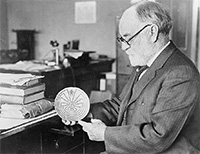
Fewkes' cylinder recordings, 30 in total and made in Calais, Maine, are considered to be the first ethnographic recordings made produced "in the field," as well as the first recordings of Native American music. The cylinders are held by the American Folklife Center at the Library of Congress. Selected for the 2002 registry.
- Expanded essay by Kelly Revak (PDF, 381KB)
- Expanded essay by Nicole Saylor
- Listen to 'Snake Dance Song' (MP3)
The Benjamin Ives Gilman Collection Recorded at the 1893 World's Columbian Exposition at Chicago (1893)

Benjamin Ives Gilman, Harvard psychologist, and, later, curator for the Boston Museum of Fine Arts, made 101 wax cylinder recordings at the 1893 Chicago World's Fair. These recordings contain Fijian, Samoan, Uvean, Javanese, Turkish, Kwakiutl or Vancouver Island Indian songs and ceremonies along with recordings of other Middle Eastern, South Seas and Native American musicians and singers who performed in specially constructed "villages" along the midway. In addition to being the first recordings ever made at any World's Fair, these are also the earliest known recordings of many non-western musical styles, such as the Javanese Gamelan. Selected for the 2014 registry.
Frances Densmore Chippewa/Ojibwe Cylinder Collection. (1907-1910)
Frances Densmore's Chippewa recordings, a three-hundred cylinder sub-set of the ethnomusicologist's thirty-year collecting effort, are some of the earliest recordings she made. Her collections, housed at the Library of Congress, document Native American traditions and performances, many of which have since been lost even within their native communities. Selected for the 2003 registry.
Cylinder recordings of Ishi. (1911-1914)

Recorded on 148 wax cylinders between September 1911 and April 1914, this is the largest collection of the extinct Yahi language. Ishi, the last surviving member of the Northern California Yahi tribe and the last speaker of its language, sings traditional Yahi songs and tells stories, including the story of "Wood Duck" recorded on 51 cylinders. The complete recordings, totaling 5 hours and 41 minutes, were made by anthropologists Alfred Kroeber and T.T. Waterman during Ishi's five-year residency at the University of California Museum of Anthropology in San Francisco (now the Phoebe A. Hearst Museum of Anthropology, UC Berkeley). The cylinders are held at the Hearst Museum in Berkeley. Selected for the 2010 registry.
Melville Jacobs Collection of Native Americans of the American Northwest. (1929-1939)

Melville Jacobs (1902-1971) was an anthropologist and linguist whose research and field recordings have made a crucial contribution to the preservation of Native American languages of the Northwestern United States including Athabascan, Chinook, Coos, Kalapuya, Lummi, Lushootseed, Sahaptin, Tillamook, Tlingit and Tsimshian. In all, Jacobs made nearly 170 recordings (on both cylinder and disc), in 23 separate languages, documenting some of the final speakers of many of these dialects. But since their creation, Jacobs's recordings and documentation have not languished in the archives as examples of forgotten traditions. Various tribes have taken a keen interest in this documentation of the language, stories, music and culture, and, in the case of the Miluk language, they have even been utilized in classes attempting to revive this vanishing native tongue. Selected for the 2018 registry.
- Expanded essay by Laurel Sercombe (PDF, 112KB)
- Listen to 'Songs in Snoqualmie' (Hand Games Songs) (MP3)
Franz Boas and George Herzog Recording of Kwakwaka'wakw Chief Dan Cranmer. (1938)

Franz Boas is considered the father of American anthropology and is the founder of both the American Anthology Association and the American Folklore Society. In 1938, Boas and his former student, ethnomusicology pioneer George Herzog, recorded 22 aluminum discs of the Kwakwaka'wakw (sometimes spelled "Kwakiutl") chief Dan Cranmer. Cranmer had been jailed in Canada in the 1920s for carrying on his people's potlatch traditions, which were still being suppressed in the 1930s. Cranmer's recordings for Boas and Herzog documented the tribe's native language and the songs, speeches, games, feasts and ceremonies of the potlatch. Today, only about 5,500 Kwakwaka'wakw tribespeople remain in British Columbia with only about 250 of them still fluent in the tribe's original language. Selected for the 2013 registry.
"Indians for Indians." (March 25, 1947)

Originated by Don Whistler (a.k.a. Chief Kesh-ke-kosh), "The Indians for Indians Hour" was a radio show aired on WNAD at the University of Oklahoma in Norman, Oklahoma from 1941 until 1985. It was a weekly venue for Native American music and cultural exchange featuring guests and music from 18 tribes reached by the station's signal, including: Apache, Arapaho, Caddo, Cheyenne, Choctaw, Comanche, Kaw, Kiowa, Osage, Oto, Pawnee, Ponca, Seminole, Shawnee, and Wichita. Whistler allowed only-Indian music and no non-Indian guests unless they worked for Indian Services. This program, one of 320 known to survive, includes news of a recent pow wow and songs praising Indian war veterans sung by a group of Kiowa war mothers. Though the program was sometimes criticized for highlighting music and entertainment instead of issues, it nevertheless served as an important tool for generational sharing and the popularization and preservation of Native American culture. In 1946, "Indians for Indians" reached an estimated weekly audience of over 75,000, almost all of Native American origin. Whistler hosted the show until his death in 1951. Later hosts included Allen Quetone, Mose Poolaw, Clyde Warrior, Clyde Warrior, and Boyce Timmons. Selected for the 2011 registry.
Leon Metcalf Collection of recordings of the First People of western Washington State. (1950-1954)
Metcalf, a logger, musician, and music instructor with a life-long interest in languages, documented songs, stories, and other narratives from native speakers in the Puget Sound region and neighboring areas. He used one of the earliest commercially available tape recorders. Among the many individuals he recorded were Ruth Shelton, Susie Sampson Peter, Annie Daniels, Martha Lamont, Willy Gus, Martin Sampson, Silas Heck, Harry Moses, Hal George, Amy Allen, and Joseph Hillaire. The Metcalf recordings not only document the voices of many native speakers, they also include unique content due to Metcalf's practice of giving his consultants free rein during recording sessions. They often recorded personal messages to one another, providing a rare aural documentation of conversational practice, and several told lengthy myth narratives that filled several reels of tape. The revival of interest in Lushootseed language and literature and, in particular, the work of Upper Skagit elder Vi Hilbert, owes much to this collection, which has been the source of material for language instruction projects and numerous publications since the 1970s. The collection is located at the Burke Museum of Natural History and Culture, University of Washington, Seattle. Selected for the 2009 registry.
"Rumble." Link Wray. (1958)
Asked for a tune that kids could dance The Stroll to, Link Wray came up with this powerfully menacing guitar instrumental on the spot, and the crowd went wild, demanding encores. When he couldn't recreate the distorted sound of his live version in a studio, Wray poked holes in his amp speakers, cranked up the tremolo, and was then able to capture what he wanted in three takes--all for a cost of $57. Originally titled "Oddball," it was renamed after the gang fights in "West Side Story" by a record producer's daughter. Wray's primal guitar influenced a generation of rockers including Jimi Hendrix, Jeff Beck, the Kinks, Jimmy Page and Neil Young. Bob Dylan called "Rumble" the "greatest instrumental ever." Pete Townshend said, "... if it hadn't been for Link Wray and 'Rumble,' I would have never picked up a guitar." Selected for the 2008 registry.
"The Sounds of the Earth." Disc prepared for the Voyager spacecraft. (1977)

This disc was prepared to introduce aurally our planet to any alien intelligence that might encounter the Voyager spacecraft many millions of years in the future. The disc contains encoded photographs, spoken messages, music and sounds as well as greetings delivered in 55 languages. The sound essay includes life sounds (EEGs and EKGs), birds, elephants, whales, volcanoes, rain and a baby. The 90 minutes of music features selections ranging from ragas to Navajo Indian chants, Javanese court gamelan, Bach's Brandenburg Concerto No. 2, a Peruvian Woman's Wedding song, and Chuck Berry's "Johnny B. Goode." Selected for the 2007 registry.